Now Reading: Destruction of PDP dangerous for our democracy, says Makinde
-
01
Destruction of PDP dangerous for our democracy, says Makinde
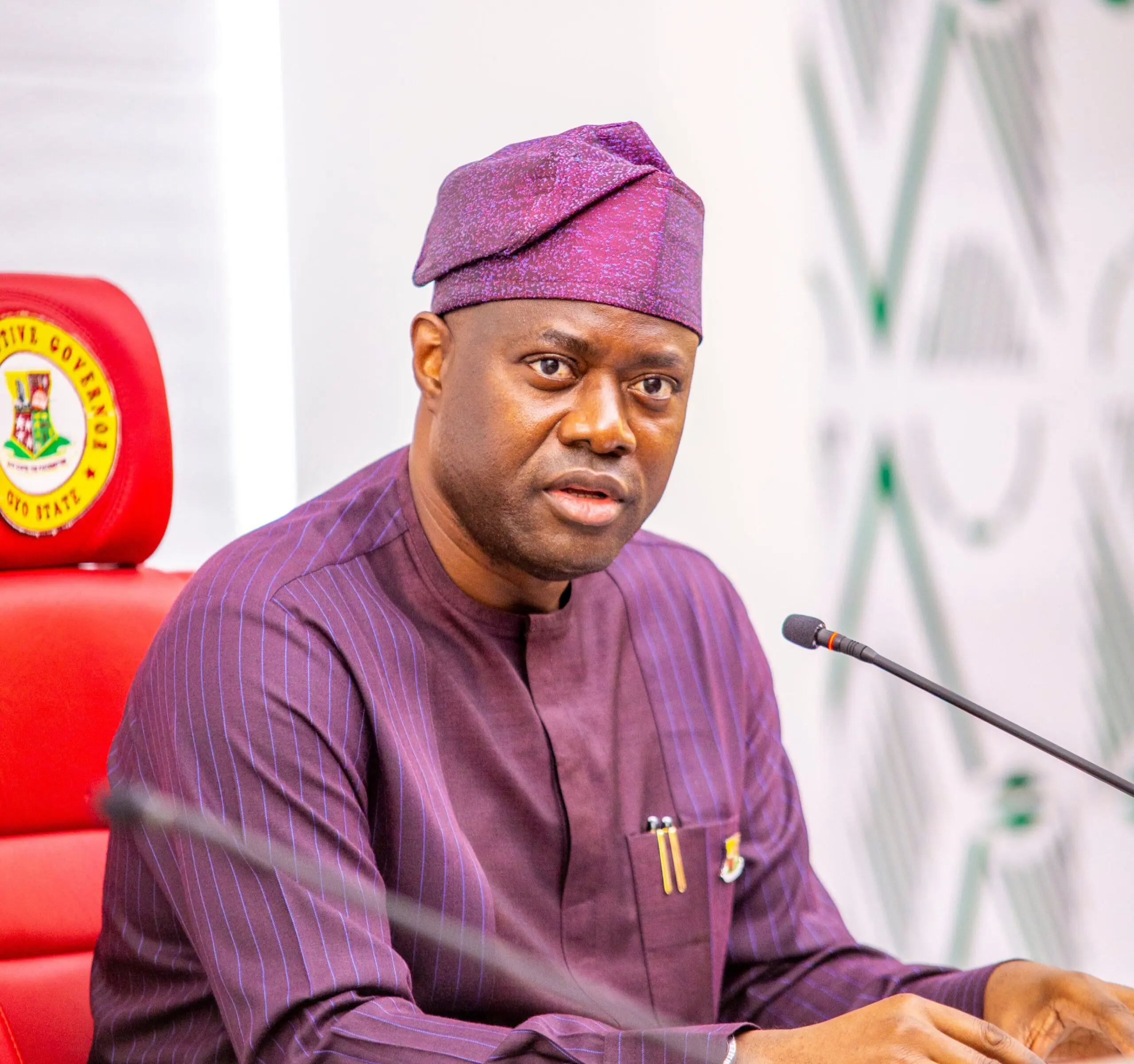

Oyo State Governor Seyi Makinde yesterday warned that the collapse of the Peoples Democratic Party (PDP) as a result of its protracted crisis could spell doom for democracy and pave the way for a one-party state.
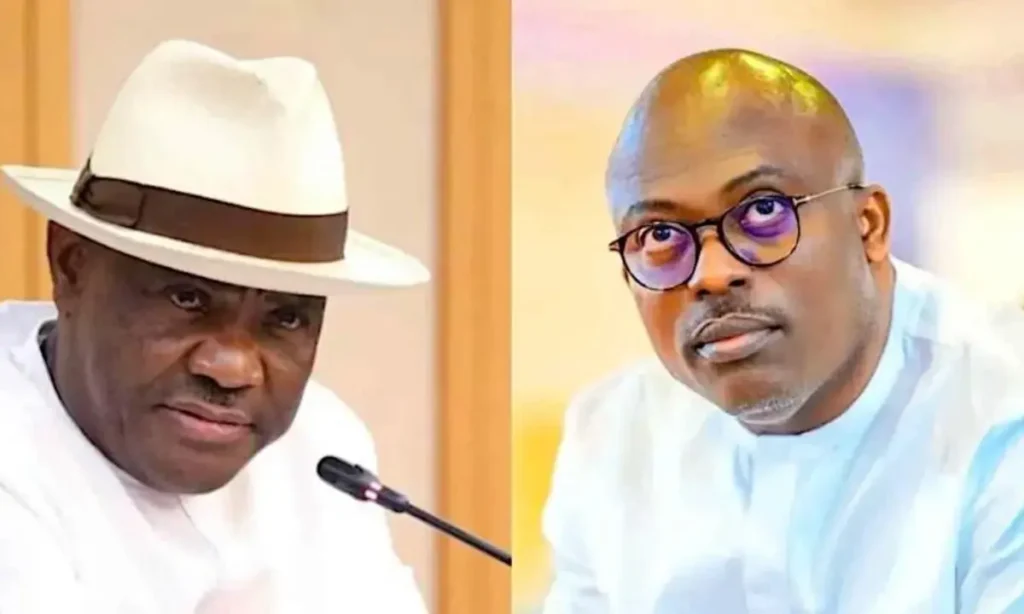
He alleged a plot by Federal Capital Territory (FCT) Minister Nyesom Wike to “hold down” the main opposition party for President Bola Ahmed Tinubu, who is seeking re-election in 2027.
Makinde, who is an arrowhead of the PDP, said that he rejected the President’s offer to him to dump the party and reorganise the All Progressives Congress (APC) in the state.
The governor, who supported President Tinubu during the 2023 poll along with his colleagues in the “Group of Five Governors (G-5,” foreclosed similar support for his second term.
He lamented that his support for the president during the last election did not produce the outcome he had hoped for.
Makinde spoke on the PDP crisis, his rift with Wike, why he refused to defect to the APC, among other issues in a media chat from Ibadan which was aired on major television channels.
He fielded question from an array of top journalists.
As a member of G-5, led by Wike, he worked against the 2023 PDP presidential candidate, Alhaji Atiku Abubakar, alleging the neglect of zoning by the party.
Other members of the then G-5 governors are ex-Governor Ifeanyi Uguwanyi (Enugu), Okezie Ikpeazu (Abia) and Samuel Ortom (Benue).
Makinde said his decision to back Tinubu was based on the belief that he would act in the national interest if elected.
He said: “I am human. I supported the current president, even though in another party at that time, because I thought we’ll do what is right for the country.”
He added that he believed the president would “reset the country” and bring together competent individuals to address the nation’s challenges.
Makinde added: “But unfortunately, that is not what we’re seeing. I regret that action. Yes, I do.”
He said for democracy to survive, PDP should be kept alive.
Makinde explained that Wike unilaterally promised President Tinubu to hold down the PDP without the consent of other party stakeholders.
He stressed: “I was in a meeting with the President and Wike and a few others, and Wike said to the President that I will hold PDP for you against 2027. So, we got up, and I asked Wike, did we agree to this?”
The governor said while Wike is entitled to support President Tinubu’s re-election bid, other PDP members also have the right to protect the PDP and oppose any move that could weaken democratic pluralism.
Makinde explained that he turned down the president’s request to organise Oyo APC because of his allegiance to the PDP.
He recounted his discussion with the president on the cabinet composition and the upgrading of the Ibadan Airport.
Makinde recalled that President Tinubu had requested him to nominate somebody with a professional background for ministerial appointment from Oyo State.
He said: “When the president said we should nominate a person who will be a minister, I said, ‘Sir, what do you have for us? He said he wanted a developmental economist who can be a minister of budget and economic planning.”
Makinde said although he complied with the request by recommending a qualified candidate from the state, the outcome differed from what was initially discussed.
He stressed: “I sent someone who is from Oyo State, and somebody else was chosen. He was not taken to the budget and economic planning. He was made minister of power.”
Makinde recalled that the ministerial nomination was discussed again when he visited the president to seek his approval for the upgrade of the Ibadan airport to international standards.
He said: “Later, when I went to seek approval for the upgrade of Ibadan airport, he said he heard I was angry that my ministerial nominee was not chosen.”
The governor said that he had no resentment over the cabinet decision, emphasising that the prerogative of appointing ministers rests solely with him
He however, said the conversation took a new turn when it shifted to party organisation in Oyo State.
Makinde said he told the president that the Minister of Power could not be relied upon to strengthen the APC structure in the state because he does not have the capacity.
He added that President Tinubu then made a direct request to him instead.
Makinde said: “He said no, it’s me that he wants to help him organise APC in Oyo State.”
However, the governor said he immediately declined the request, citing party loyalty and his political principles.
He added: “I told him no: ‘I cannot help you because I am of the PDP.”
Makinde explained that he parted ways with his political ally, Wike, because he aligned himself with President Tinubu to weaken the PDP, particularly in Oyo State, ahead of the 2027 poll.
Makinde threw a jibe at Wike’s antecedents as a man known only for his time in politics.
Tendering a certificate of $1milion contract he won, he said he started making money at the multi-national level long before the minister started practising as a lawyer.
He recalled that at the age of 29, he was already earning millions of dollars in oil companies when Wike had just completed law school.
Makinde said: “Within one year, I made $1 million in my pocket. I was 29 in 1997. Wike, perhaps, at that time, had just left the law school, and his next job was as a local government chairman.”
Makinde warned that the plan to destroy the PDP could ultimately undermine democracy and erode multi-party system.
He urged democrats to resist any plot to impose a one-party system on the country.
The governor said he is eminently qualified to serve as president in 2027, if the opportunity comes his way.
He said his qualifications for the highest office were not in doubt, pointing to his record as governor of Oyo State.
Alluding to how President Tinubu got to office, he explained experience at the state level has always historically prepared leaders for the presidency,
Makinde also highlighted his professional background outside politics, noting that he successfully ran a private company from 29 yeas of age.
He stressed: “I have heard that also, people saying, ‘Oh, is Seyi trying to position himself for the 2027 presidency?’
“Let me make this very clear: to serve this country at the highest level, I am qualified. I am even overqualified. I have run Oyo State. Even the current president, what brought him to the table? He was governor of Lagos State. By the end of May 2027, by God’s grace, God sparing my life, I would have completed two terms as governor of Oyo State. Professionally, I ran a company from a very young age, at 29,” he said.
Makinde also spoke about the legacy he would leave behind in Oyo State, saying that he hoped to be remembered for the institutions his government is building rather than for physical projects.
He said he his focusing on creating systems that will ensure good governance, sustainable development, and growth long after his tenure.
Makinde pointed out that infrastructure alone does not guarantee a lasting legacy, unless projects are completed and embedded within strong institutions.
Citing the example of a major ring road, he noted that once such projects are completed, people often forget who initiated them, while unfinished projects tend to be remembered more vividly.
He added that his administration prioritises creating opportunities and a conducive environment for citizens to improve their lives, rather than relying on handouts.
On the Ibadan Circular Road project, Makinde defended his administration against allegations of land grabbing linked to the 500-metre corridor.
He explained that the land corridor was officially gazetted on November 19, 2018, months before he assumed office in May 2019.
He said the 110-kilometre circular road is designed to ease traffic flow around Ibadan and prevent congestion.
The governor described the corridor as part of a modern motorway standard and a commercial corridor aimed at helping Oyo State to transit from a consumptive to a productive economy.
On compensation, the governor said his administration is adopting a humane approach by offering payments to residents without formal land documentation, provided they can show proof of residence, to enable them to resettle elsewhere.
Source: The Nation