Now Reading: ‘Prices of petrol, diesel, LPG will continue to fall’
-
01
‘Prices of petrol, diesel, LPG will continue to fall’
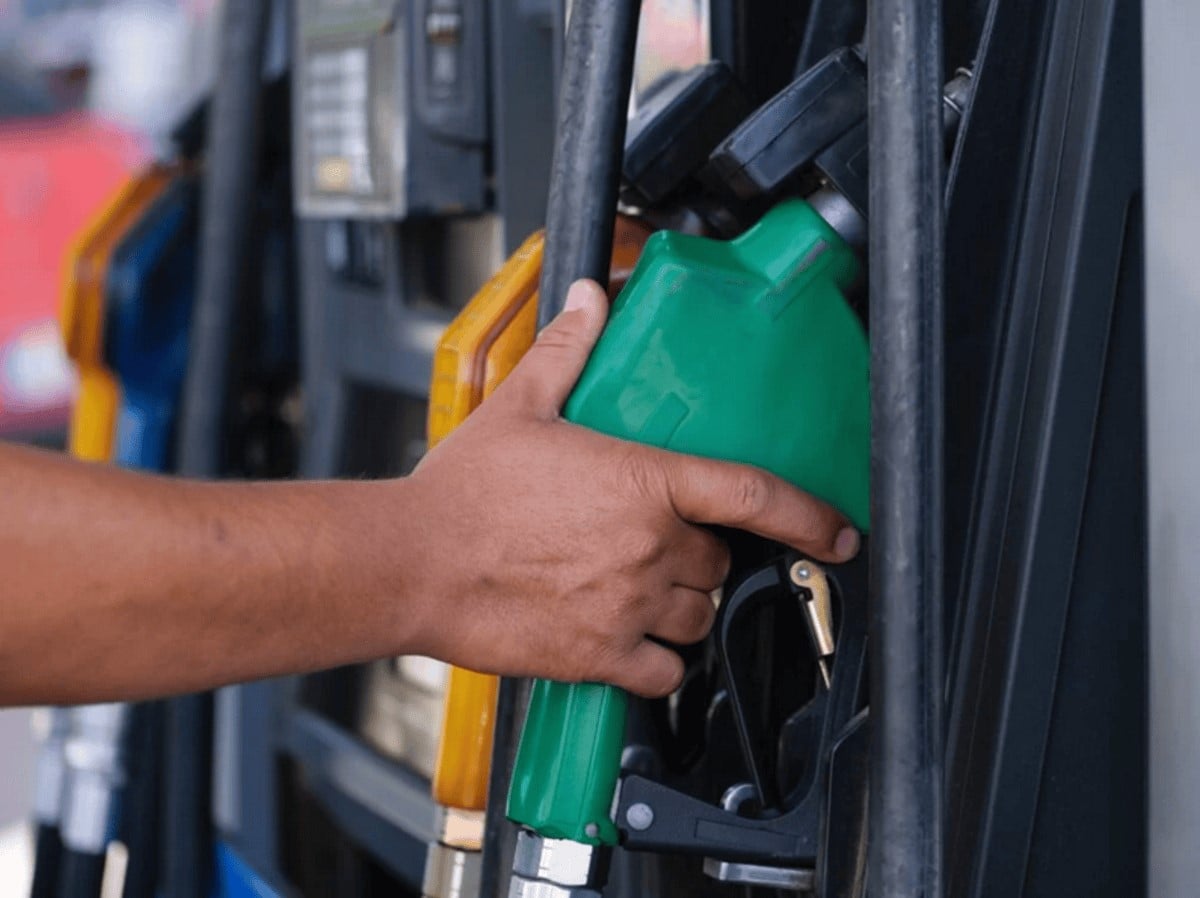

The prices of petrol, diesel, and Liquefied Petroleum Gas (LPG) will continue to decline nationwide, the Nigerian Midstream and Downstream Petroleum Regulatory Authority (NMDPRA) has said.
Its Chief Executive Officer, Mr. Saidu Mohammed, stated this at the weekend in Ogbele Community, Ahoada East Local Government Area of Rivers State, during the inspection of facilities belonging to Aradel Holdings Plc.
Mohammed, who attributed the expected price reduction to rising supply, increased competition, and sustained private-sector investment in the oil and gas sector, urged the private sector to pump between $30 billion and $50 billion into the midstream petroleum sector.
Highlighting the expected reduction in energy prices, the NMDPRA boss said Nigerians were gradually moving towards affordable energy as improved supply continues to drive price stability.
“The more supply we have, the lower the price. This is already evident as petrol has dropped from about N1,000 to N800 per litre due to competition,” he said.
Mohammed explained that the removal of fuel subsidy has allowed market forces to function properly, leading to efficiency across the downstream sector.
“Sustained competition, rather than subsidies, will guaranty adequate supply of petrol and gas at affordable prices for Nigerians,” Mohammed added.
The agency boss stressed the need for additional refineries with advanced conversion capacity to produce diesel, fuel oil, naphtha, LPG, and petrol.
The NMDPRA chief executive said Nigeria’s ambition extended beyond local consumption to exporting petroleum products to Africa, Europe, and the Americas.
“However, domestic demand must first be adequately met by local operators before large-scale exports can commence,” he said.
Mohammed noted that President Bola Ahmed Tinubu strongly supported a free-market economy, recalling that subsidy removal was the President’s first major policy decision.
According to him, the policy unlocked private sector participation and stimulated investments across the oil and gas value chain.
Assessing the condition of state-owned refineries, Mohammed said their operational conditions largely remained the responsibility of the Nigerian National Petroleum Company Limited (NNPCL).
NMDPRA, he said, was engaging NNPCL to ensure the delivery of crude oil and petroleum products to the Port Harcourt and Warri refineries reserves.
“Delivery of products to the reserves and restoring loading activities at the refineries will boost local economies and revive product distribution within host communities.
“Once product loading resumes, Nigerians will begin to feel the economic impact, even before full refinery operations,” he said.
Mohammed added that Nigeria’s economic growth depended heavily on the rapid expansion of locally owned midstream assets.
Advising the private sector to pump between $30 billion and $50 billion into the midstream petroleum sector, Mohammed said: “I said it two days ago that the midstream sector alone will require about $30 billion to $50 billion investment. Those investments can only come from the private sector, not the government anymore.
“So, as an authority, as a regulator, what we will do is to make sure that we lay down the desired enablers for them to operate and attract the investment that Nigeria needs.
“But first of all, we have to improve how we do things and the improvement can be seen here in a world-class facility being operated by Nigerians. That is the way to go.”
The NMDPRA said the government agency was impressed to see fully-integrated facilities designed, built, operated, and fully-funded by Nigerians
He said the facilities inspected during his three-day operational tour across Rivers State demonstrated that Nigerians had the capacity to design, finance, build, and sustainably operate world-class energy infrastructure.
Mohammed singled out Aradel Holdings, stating that the company had proven that Nigerians could efficiently operate a refinery sustainably without foreign operatorship.
The NMDPRA announced that Aradel’s ongoing expansion would make it possible to load petrol from its facility before the end of next year.
“Aradel has supplied gas to the Nigeria Liquefied Natural Gas (NLNG) for about 13 years, alongside operating an 11,000-barrels-per-day refinery.
“The company also runs a virtual gas pipeline, producing compressed natural gas distributed across several parts of Nigeria,” he said.
Mohammed called for more investments in refining, noting that the Dangote Refinery alone cannot meet domestic, continental, and global demands.
The NMDPRA boss described the midstream sector as Nigeria’s strongest driver of economic growth with the capacity to stimulate manufacturing, power generation, transportation, and other productive sectors.
He assured fellow Nigerians that the NMDPRA would continue to provide regulatory incentives to attract large-scale investments into the midstream sector.
The Managing Director of Aradel Holdings, Mr. Adegbite Falade, said the company remained committed to expanding refining capacity, commercialising gas and eliminating routine gas flaring.
He said: “We are not overwhelmed by rising demand, as the company is already expanding its refining capacity beyond current levels.
“We see the demand; we see the market. All we are trying to do is to continue to make those investments that allow us to meet the demand. The demand is very huge.
“We have received support from the regulator. We have seen all kinds of support that continues to make our operations grow from one stage to another.
“It is a great and worthy space for fellow investors and operators to come into. The more we are, the more we build on the redundancy and the resilience of our energy security as a nation.
“We are committed to that course. We are looking at our capacity, and we are just projecting to grow it from one level to another. We are not overwhelmed, but we are doing our best to be part of that solution for energy security.
“Aradel aims to be part of the long-term solution to Nigeria’s energy supply challenges. Nigerians should expect continued scaling, local value addition, and prioritisation of domestic energy needs.”
Source: The Nation