Now Reading: Reps probe tax law tweaks, PDP demands suspension
-
01
Reps probe tax law tweaks, PDP demands suspension
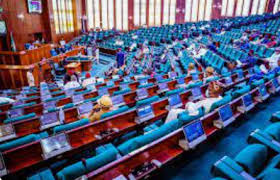

The House of Representatives on Thursday constituted an ad hoc committee to probe the alleged discrepancies in the tax reforms passed by the parliament and the official gazetted copy currently in circulation across government agencies.
This was as the Peoples Democratic Party demanded that the Federal Government further shift forward by six months the January 1, 2026 take-off of the new tax law.
The opposition party said the shift became important following an alleged illegal alteration made to the law passed by the National Assembly.
The PDP added that the six-month shift would allow for “sufficient enlightenment campaigns on the new Act.”
President Bola Tinubu recently signed four major tax reform bills into law, marking what the government has described as the most significant overhaul of Nigeria’s tax system in decades.
The laws include the Nigeria Tax Act, the Nigeria Tax Administration Act, the Nigeria Revenue Service (Establishment) Act and the Joint Revenue Board (Establishment) Act, all operating under a single authority, the Nigeria Revenue Service.
The reforms are designed to simplify tax compliance, expand the tax base, eliminate overlapping taxes and modernise revenue collection across federal, state and local governments.
The laws are scheduled to take effect on January 1, 2026, following a six-month transition period for public education and system alignment.
However, the reforms have continued to attract mixed reactions nationwide.
On Wednesay, a PDP lawmaker from Sokoto State, Abdussamad Dasuki, drew the attention of the House of Representatives to alleged discrepancies in the tax reforms passed by the National Assembly and the copy gazetted by the Federal Government.
Dasuki warned that if not addressed, the alterations would render the new tax laws legally vulnerable as they lack legislative approval.
At the resumption of plenary on Thursday, the Speaker, Tajudeen Abbas, underscored the seriousness of the allegations by announcing a seven-man ad hoc committee to investigate the claims and submit a report to the House for further legislative action.
He said, “On the revised tax laws, the House leadership has unanimously agreed that a committee should be set up immediately to look into the matters that were raised and many others. In that respect, I’m happy to announce to you that the following members have been appointed to the committee. They are Mukhtar Betara as Chairman, Idris Wase, James Faleke, Sada Soli, Igariwey Iduma, Fredrick Agbedi and Babajimi Benson.”
At Wednesday’s plenary, Dasuki had called on the House to revisit the gazetted version of the law and compare to what the National Assembly passed.
“I plead that all the documents should be brought before the Committee of the Whole so that we can make the relevant amendments.
“This is a breach of the Constitution and our laws, and this should not be taken by this Honorable House,” he added.
In response to the allegation, the PDP, on Thursday, commended Dasuki “for his fastidiousness and courage in the discharge of his legislative duties.”
It demanded “that the commencement date of the Tax Act be shifted from January 1, 2026, for at least six months to allow sufficient time for the investigation of this anomaly.”
The PDP warned that the disparity must be comprehensively investigated “and not treated with the customary levity this administration has shown towards serious issues of governance.”
“I plead that all the documents should be brought before the Committee of the Whole so that we can make the relevant amendments.
“This is a breach of the Constitution and our laws, and this should not be taken by this Honorable House,” he added.
In response to the allegation, the PDP, on Thursday, commended Dasuki “for his fastidiousness and courage in the discharge of his legislative duties.”
It demanded “that the commencement date of the Tax Act be shifted from January 1, 2026, for at least six months to allow sufficient time for the investigation of this anomaly.”
The PDP warned that the disparity must be comprehensively investigated “and not treated with the customary levity this administration has shown towards serious issues of governance.”
The PDP’s call comes a date after the National Opposition Movement, on Wednesdaym demanded the immediate suspension of the tax plan’s implementation, warning that forcing it through would worsen the living conditions of Nigerians.
Addressing a press conference on Wednesday at the Yar’Adua Centre, Abuja, the NOM spokesperson, Chille Igbawua, said Nigerians were already struggling with poverty, unemployment and rising living costs, insisting the new tax regime would be punitive.
The NOM, a coalition of citizens drawn from various opposition parties, said it monitors policies affecting Nigeria’s security, economy and overall prosperity under the Tinubu administration, while advocating national liberation and transformation.
Igbawua described the planned implementation as “shocking” and “punitive,” arguing that Nigerians are already struggling to meet basic needs.
“This new tax plan must not take off now. Its implementation must be suspended immediately. This is not tax reform; it is a weapon fashioned against the economic well-being and social security of suffering Nigerians,” he said.
“You cannot tax hunger. You cannot tax poverty. And you cannot tax people into prosperity. Since coming to office, President Tinubu has shown that his priorities are not with ordinary Nigerians but with a few oligarchs tied to his economic and political interests.”
But the Federal Government, on Thursday, pushed back, alleging that some individuals were attempting to undermine the success of ongoing tax reforms, insisting that the policies are pro-poor and aimed at recalibrating national revenue generation.
The Special Adviser to the President on Economic Affairs, Tope Fasua, made the allegation on Thursday during the inauguration of a Joint Committee of the National Orientation Agency and the Presidential Committee on Fiscal Policy and Tax Reforms in Abuja.
“We must state clearly that this is a pro-poor policy — one designed to recalibrate the revenue of this country in a way that ensures the poorest Nigerians are not harmed, except positively,” Fasua said.
He stressed that the reforms were not intended to increase the tax burden on citizens or small businesses, citing the partial opening of the Brass–Nembe Road as an example of infrastructure development made possible through improved revenue mobilisation.
“Recently, the Brass–Nembe Road was partially opened. That is the kind of progress we can expect when revenue and tax systems work better. We will also continue to draw lessons from how other countries have implemented similar reforms,” Fasua added.
Earlier, the Chairman of the Presidential Committee on Fiscal Policy and Tax Reforms, Taiwo Oyedele, had said during a courtesy visit to the NOA that the reforms were designed to ease, rather than worsen, the burden on Nigerians. He lamented that widespread misinformation had continued to fuel unnecessary fear and anger over the policies.
Implementation of the reforms is scheduled to begin on January 1, 2026. Key provisions include tax exemptions for small businesses, reduced tax burdens for workers and the middle class, lower corporate tax rates, harmonisation of multiple taxes across federal, state and local governments, streamlined compliance processes, and the elimination of nuisance taxes to encourage investment.
Also speaking, the Director-General of the NOA, Lanre Issa-Onilu, represented by the Director of Planning, Research and Statistics, Nura Kobi, said the agency would deploy its 16 communication platforms across the 774 local government areas to address public misconceptions about the new tax laws.
Issa-Onilu said that although the reforms are scheduled to commence on January 1, 2026, it is crucial for Nigerians to clearly understand what the policies mean, why they are necessary, and how they will be implemented.
“Across the world, public policies rarely fail because they are poorly designed; they fail because they are poorly communicated,” he said. “When the message is not understood, the messenger must return.”
Source: Punch